
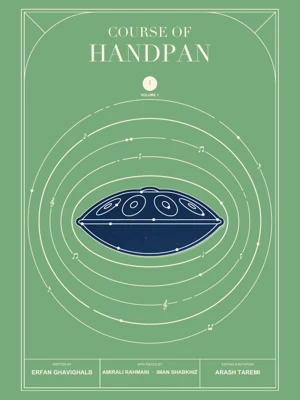
LEVELS 1–5
Course of Handpan · Book 1
The reference book for the first five levels of PlayPan.
View on Amazon (opens in a new tab)

Choose a PlayPan plan to watch this video.
View Plans
The reference book for the first five levels of PlayPan.
View on Amazon (opens in a new tab)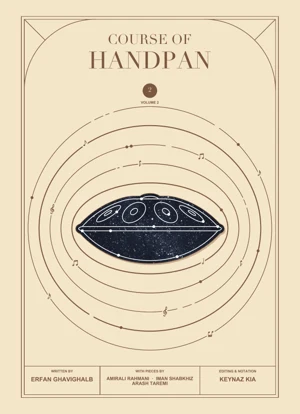
The reference book for the next five levels of PlayPan.
View on Amazon (opens in a new tab)Lesson description and learning notes
The handpan (hang drum) is primarily a percussive instrument, and to perform it accurately and effectively, it is essential to develop hand coordination, control, and strength. Proper hand preparation ensures that each strike is precise, clean, and expressive, forming the foundation for advanced techniques and musical phrasing
After learning various handpan techniques in previous sessions, this lesson focuses on practicing double strokes and paradiddle strokes. These techniques are essential for building percussive skills and rhythmic control, and they serve as fundamental exercises not only for handpan playing but also for mastering other percussion instruments
In this lesson, you will train your hands to execute smooth, controlled double strokes, where each hand strikes consecutively, as well as paradiddle patterns, which combine alternating and repeated strokes to create complex rhythmic sequences. These exercises help improve timing, hand independence, and dynamic control, which are critical for expressive handpan performance
To maximize the benefits, incorporate these double stroke and paradiddle exercises into your daily practice routine, starting slowly to ensure proper technique, and gradually increasing speed while maintaining accuracy. Over time, consistent practice will enhance your percussion skills, rhythm mastery, and overall handpan playing ability, allowing you to perform with confidence and musicality
 1. Course Introduction
Free
Completed
1. Course Introduction
Free
Completed
 2. Correct Playing Posture for Handpan
Free
Completed
2. Correct Playing Posture for Handpan
Free
Completed
 3. How to Play Handpan Notes Correctly?
Plan required
Completed
3. How to Play Handpan Notes Correctly?
Plan required
Completed
 4. Handpan Symbols
Plan required
Completed
4. Handpan Symbols
Plan required
Completed
 5. Breathing and Mindfulness – Session 1: Diaphragmatic Breathing
Free
Completed
5. Breathing and Mindfulness – Session 1: Diaphragmatic Breathing
Free
Completed
 6. Breathing and Mindfulness – Session 2: Oceanic Breathing
Plan required
Completed
6. Breathing and Mindfulness – Session 2: Oceanic Breathing
Plan required
Completed
 7. Warm-Up and Corrective Exercises – Session 1
Plan required
Completed
7. Warm-Up and Corrective Exercises – Session 1
Plan required
Completed
 8. Warm-Up and Corrective Exercises – Session 2
Plan required
Completed
8. Warm-Up and Corrective Exercises – Session 2
Plan required
Completed
 9. warm-Up and Corrective Exercises – Session 3
Plan required
Completed
9. warm-Up and Corrective Exercises – Session 3
Plan required
Completed
 10. Handpan Warm-Up & Breathing
Free
Completed
10. Handpan Warm-Up & Breathing
Free
Completed
 11. Lesson 57: Performing Piece No. 8
Plan required
Completed
11. Lesson 57: Performing Piece No. 8
Plan required
Completed
 12. Lesson 58, performing piece No. 9: practicing the rhythmic pattern and playing the melody line over the pattern.
Plan required
Completed
12. Lesson 58, performing piece No. 9: practicing the rhythmic pattern and playing the melody line over the pattern.
Plan required
Completed
 13. Lesson 59 and Performance of Piece No. 10 – Playing and Introduction to Arpeggios on the Handpan.
Plan required
Completed
13. Lesson 59 and Performance of Piece No. 10 – Playing and Introduction to Arpeggios on the Handpan.
Plan required
Completed
 14. Lesson 60: Performing Piece 11 – Combining Eight-Note Rhythmic Patterns with Melody
Plan required
Completed
14. Lesson 60: Performing Piece 11 – Combining Eight-Note Rhythmic Patterns with Melody
Plan required
Completed
 15. Lesson 61: Practicing a Section of the Rotation Melody on Handpan
Free
Completed
15. Lesson 61: Practicing a Section of the Rotation Melody on Handpan
Free
Completed
 16. Lessons 62 to 65: Practicing Piece 12 – First Rhythmic Pattern of Rotation
Plan required
Completed
16. Lessons 62 to 65: Practicing Piece 12 – First Rhythmic Pattern of Rotation
Plan required
Completed
 17. Lessons 66 & 67: Practicing Piece 13 – Second Rhythmic Pattern of Rotation
Plan required
Completed
17. Lessons 66 & 67: Practicing Piece 13 – Second Rhythmic Pattern of Rotation
Plan required
Completed
 18. Lessons 68 & 69: Practicing the third rhythmic pattern of Rotation, performing Piece 14
Plan required
Completed
18. Lessons 68 & 69: Practicing the third rhythmic pattern of Rotation, performing Piece 14
Plan required
Completed
 19. Lessons 70 & 71: Performing Piece 15 – The Fourth Rhythmic Pattern of Rotation
Plan required
Completed
19. Lessons 70 & 71: Performing Piece 15 – The Fourth Rhythmic Pattern of Rotation
Plan required
Completed
 20. Lesson 72: Performing Piece 16 – Playing and Constructing Melodic Structures Using Chords
Plan required
Completed
20. Lesson 72: Performing Piece 16 – Playing and Constructing Melodic Structures Using Chords
Plan required
Completed
 21. Lesson 73 & 74: Preparatory Exercises for Performing Passages
Plan required
Completed
21. Lesson 73 & 74: Preparatory Exercises for Performing Passages
Plan required
Completed
 22. Lesson 75: Learning and Performing Triplet Notes, Whole Notes, and Half Notes
Plan required
Completed
22. Lesson 75: Learning and Performing Triplet Notes, Whole Notes, and Half Notes
Plan required
Completed
 23. Lessons 76, 77, 78: Practicing Single Strokes and Accents on the Handpan
Plan required
Completed
23. Lessons 76, 77, 78: Practicing Single Strokes and Accents on the Handpan
Plan required
Completed
 24. Lessons 79 to 84: Practicing Double Strokes and Paradiddle Strokes on the Handpan
Now playing
Plan required
Completed
24. Lessons 79 to 84: Practicing Double Strokes and Paradiddle Strokes on the Handpan
Now playing
Plan required
Completed
 25. Lessons 85 to 93: Exploring Time Signatures and Ghost Note Execution on the Handpan
Plan required
Completed
25. Lessons 85 to 93: Exploring Time Signatures and Ghost Note Execution on the Handpan
Plan required
Completed
 26. Lesson 94 – Learning and Performing Piece No 17 in 6/8 Time Signature on the Handpan
Plan required
Completed
26. Lesson 94 – Learning and Performing Piece No 17 in 6/8 Time Signature on the Handpan
Plan required
Completed
Comments