
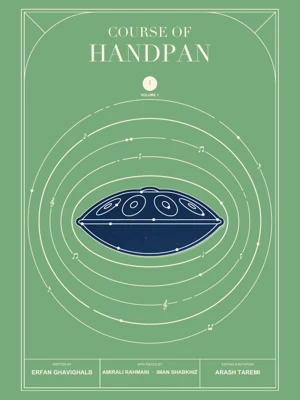
LEVELS 1–5
Course of Handpan · Book 1
The reference book for the first five levels of PlayPan.
View on Amazon (opens in a new tab)

Choose a PlayPan plan to watch this video.
View PlansPlay backing tracks here, download them, or open the original file in a new tab.
The reference book for the first five levels of PlayPan.
View on Amazon (opens in a new tab)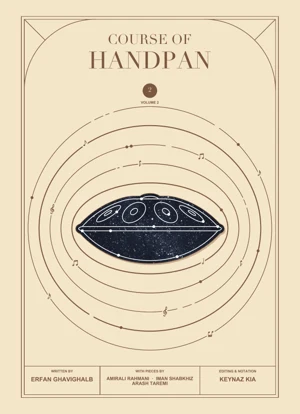
The reference book for the next five levels of PlayPan.
View on Amazon (opens in a new tab)Lesson description and learning notes
One of the most effective and widely used methods of handpan (hang drum) composition is arranging a sequence of chords and gradually expanding or developing them to create rich melodic textures. This technique allows players to construct compelling musical pieces while exploring harmony, rhythm, and expression on the handpan
The melodic structure of this piece is built from a sequence and repetition of several defined chord cycles. At first, these chords are played simply with precise counting, helping you internalize timing and coordination. Once comfortable, the chord sequences are transformed into arpeggios, allowing you to perform the melodic line with greater fluidity and musicality
By adding a touch of creativity, such as substituting lower notes with other notes within the arpeggio, you can discover richer melodic possibilities and craft unique variations. Incorporating the slap technique adds another layer of rhythmic complexity, utilizing the handpan’s full percussive potential and expanding the overall sonic palette of your performance
The slap technique is just one of hundreds of rhythmic patterns available for handpan players. Through consistent practice, you can combine slaps, arpeggios, and chord progressions to create dynamic and expressive handpan arrangements
In this session, it is essential to pay careful attention to hand placement and finger technique, especially as the slap technique alters the way notes are struck. Practice slowly at first, maintaining precise timing and clean execution, and gradually increase tempo to match the melodic and rhythmic flow of the piece
By using your prior knowledge from previous lessons—note reading, rhythmic patterns, hand positioning, and finger exercises—you can expand your composition skills and explore a wide range of musical forms and textures on the handpan. This method not only enhances musical creativity but also strengthens hand coordination, timing, and overall control over the instrument
Through this comprehensive approach, students can develop a deeper understanding of handpan music theory, improve their technical skills, and enjoy a more expressive and versatile handpan playing experience
 1. Course Introduction
Free
Completed
1. Course Introduction
Free
Completed
 2. Correct Playing Posture for Handpan
Free
Completed
2. Correct Playing Posture for Handpan
Free
Completed
 3. How to Play Handpan Notes Correctly?
Plan required
Completed
3. How to Play Handpan Notes Correctly?
Plan required
Completed
 4. Handpan Symbols
Plan required
Completed
4. Handpan Symbols
Plan required
Completed
 5. Breathing and Mindfulness – Session 1: Diaphragmatic Breathing
Free
Completed
5. Breathing and Mindfulness – Session 1: Diaphragmatic Breathing
Free
Completed
 6. Breathing and Mindfulness – Session 2: Oceanic Breathing
Plan required
Completed
6. Breathing and Mindfulness – Session 2: Oceanic Breathing
Plan required
Completed
 7. Warm-Up and Corrective Exercises – Session 1
Plan required
Completed
7. Warm-Up and Corrective Exercises – Session 1
Plan required
Completed
 8. Warm-Up and Corrective Exercises – Session 2
Plan required
Completed
8. Warm-Up and Corrective Exercises – Session 2
Plan required
Completed
 9. warm-Up and Corrective Exercises – Session 3
Plan required
Completed
9. warm-Up and Corrective Exercises – Session 3
Plan required
Completed
 10. Handpan Warm-Up & Breathing
Free
Completed
10. Handpan Warm-Up & Breathing
Free
Completed
 11. Lesson 57: Performing Piece No. 8
Plan required
Completed
11. Lesson 57: Performing Piece No. 8
Plan required
Completed
 12. Lesson 58, performing piece No. 9: practicing the rhythmic pattern and playing the melody line over the pattern.
Plan required
Completed
12. Lesson 58, performing piece No. 9: practicing the rhythmic pattern and playing the melody line over the pattern.
Plan required
Completed
 13. Lesson 59 and Performance of Piece No. 10 – Playing and Introduction to Arpeggios on the Handpan.
Plan required
Completed
13. Lesson 59 and Performance of Piece No. 10 – Playing and Introduction to Arpeggios on the Handpan.
Plan required
Completed
 14. Lesson 60: Performing Piece 11 – Combining Eight-Note Rhythmic Patterns with Melody
Plan required
Completed
14. Lesson 60: Performing Piece 11 – Combining Eight-Note Rhythmic Patterns with Melody
Plan required
Completed
 15. Lesson 61: Practicing a Section of the Rotation Melody on Handpan
Free
Completed
15. Lesson 61: Practicing a Section of the Rotation Melody on Handpan
Free
Completed
 16. Lessons 62 to 65: Practicing Piece 12 – First Rhythmic Pattern of Rotation
Plan required
Completed
16. Lessons 62 to 65: Practicing Piece 12 – First Rhythmic Pattern of Rotation
Plan required
Completed
 17. Lessons 66 & 67: Practicing Piece 13 – Second Rhythmic Pattern of Rotation
Plan required
Completed
17. Lessons 66 & 67: Practicing Piece 13 – Second Rhythmic Pattern of Rotation
Plan required
Completed
 18. Lessons 68 & 69: Practicing the third rhythmic pattern of Rotation, performing Piece 14
Plan required
Completed
18. Lessons 68 & 69: Practicing the third rhythmic pattern of Rotation, performing Piece 14
Plan required
Completed
 19. Lessons 70 & 71: Performing Piece 15 – The Fourth Rhythmic Pattern of Rotation
Plan required
Completed
19. Lessons 70 & 71: Performing Piece 15 – The Fourth Rhythmic Pattern of Rotation
Plan required
Completed
 20. Lesson 72: Performing Piece 16 – Playing and Constructing Melodic Structures Using Chords
Now playing
Plan required
Completed
20. Lesson 72: Performing Piece 16 – Playing and Constructing Melodic Structures Using Chords
Now playing
Plan required
Completed
 21. Lesson 73 & 74: Preparatory Exercises for Performing Passages
Plan required
Completed
21. Lesson 73 & 74: Preparatory Exercises for Performing Passages
Plan required
Completed
 22. Lesson 75: Learning and Performing Triplet Notes, Whole Notes, and Half Notes
Plan required
Completed
22. Lesson 75: Learning and Performing Triplet Notes, Whole Notes, and Half Notes
Plan required
Completed
 23. Lessons 76, 77, 78: Practicing Single Strokes and Accents on the Handpan
Plan required
Completed
23. Lessons 76, 77, 78: Practicing Single Strokes and Accents on the Handpan
Plan required
Completed
 24. Lessons 79 to 84: Practicing Double Strokes and Paradiddle Strokes on the Handpan
Plan required
Completed
24. Lessons 79 to 84: Practicing Double Strokes and Paradiddle Strokes on the Handpan
Plan required
Completed
 25. Lessons 85 to 93: Exploring Time Signatures and Ghost Note Execution on the Handpan
Plan required
Completed
25. Lessons 85 to 93: Exploring Time Signatures and Ghost Note Execution on the Handpan
Plan required
Completed
 26. Lesson 94 – Learning and Performing Piece No 17 in 6/8 Time Signature on the Handpan
Plan required
Completed
26. Lesson 94 – Learning and Performing Piece No 17 in 6/8 Time Signature on the Handpan
Plan required
Completed
Comments