
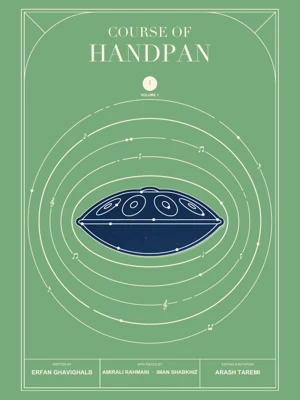
LEVELS 1–5
Course of Handpan · Book 1
The reference book for the first five levels of PlayPan.
View on Amazon (opens in a new tab)

Choose a PlayPan plan to watch this video.
View PlansPlay backing tracks here, download them, or open the original file in a new tab.
The reference book for the first five levels of PlayPan.
View on Amazon (opens in a new tab)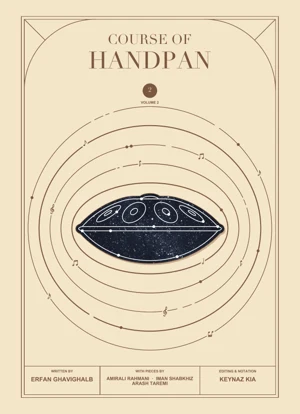
The reference book for the next five levels of PlayPan.
View on Amazon (opens in a new tab)Lesson description and learning notes
Learning and Performance of Lesson 40 and Piece 10 (Handpan Structural Form and Melodic Development)
In this piece, a clear structural form is presented, providing an excellent framework for creating new compositions and developing musical ideas. The piece begins with the main melody in section (A), emphasizing the use of the left hand and off-beats. This section focuses on mastering rhythmic variations and accents, helping the player gain a deeper understanding of tempo, rhythm, and dynamic emphasis. In handpan playing, this technique is essential for adding variety and expressiveness to rhythmic patterns
Section (B) introduces a combination of rhythm and melody, making it easier for the player to understand how these two musical elements interact. This part serves as a valuable practice point for integrating rhythmic and melodic elements, enhancing the player’s ability to synchronize both components effectively
Section (C) brings in the second melody, complementing the previous section. Here, the interaction between the first and second melodies becomes more prominent, requiring the performer to pay close attention to blending the two lines seamlessly. Mastering this interaction helps achieve a harmonically rich and cohesive performance
Section (D) represents the climax of the piece, where a passage introduces the third melody. This is a critical section as it adds energy, excitement, and dynamic contrast to the composition. Successful execution requires careful attention to dynamic changes and emotional expression, making the piece feel vibrant and engaging for the listener
In the final section (E), the second melody returns, reinforcing cohesion and harmonic unity. Repeating this melody helps solidify the overall musical structure in the listener’s mind and enhances their perception of structural and rhythmic variations within the piece
Practice Recommendations
It is recommended that performers practice each section individually before combining them into a full performance. This approach is especially effective for pieces with complex structural forms, enabling players to gain a clear understanding of the composition’s architecture, execute it with precision, and convey strong musical expression
Learning Outcomes
This piece provides a valuable opportunity to develop key handpan skills, including:
Precise rhythm control and timing accuracy
Emphasis on off-beats and rhythmic accents
Effective melody repetition and thematic development
Blending multiple melodies for harmonic cohesion
Expressive dynamic control and emotional performance
By mastering this lesson and piece, handpan players can enhance both their technical proficiency and musical creativity, preparing them for advanced compositions and expressive performance
 1. Course Introduction
Free
Completed
1. Course Introduction
Free
Completed
 2. Scale Introduction for Training and Playing Pieces
Free
Completed
2. Scale Introduction for Training and Playing Pieces
Free
Completed
 3. Proper handpan placement for practice
Plan required
Completed
3. Proper handpan placement for practice
Plan required
Completed
 4. Handpan Symbols
Plan required
Completed
4. Handpan Symbols
Plan required
Completed
 5. Learning Dynamics on the Handpan
Plan required
Completed
5. Learning Dynamics on the Handpan
Plan required
Completed
 6. Learning and Performance of Lessons 28 & 29 and Piece No. 7 (Samba Piece on Handpan)
Plan required
Completed
6. Learning and Performance of Lessons 28 & 29 and Piece No. 7 (Samba Piece on Handpan)
Plan required
Completed
 7. Learning and Performance of Lessons 30 to 37 (Heel and Tip Technique)
Plan required
Completed
7. Learning and Performance of Lessons 30 to 37 (Heel and Tip Technique)
Plan required
Completed
 8. Learning and Performance of Lesson 38 and Piece No. 8 (Handpan Advanced Rhythms)
Plan required
Completed
8. Learning and Performance of Lesson 38 and Piece No. 8 (Handpan Advanced Rhythms)
Plan required
Completed
 9. Learning and Performance of Lesson 39 and Piece No 9
Now playing
Plan required
Completed
9. Learning and Performance of Lesson 39 and Piece No 9
Now playing
Plan required
Completed
 10. Learning and Performance of Lessons 40 to 46
Plan required
Completed
10. Learning and Performance of Lessons 40 to 46
Plan required
Completed
 11. Lesson and Performance of Piece No. 10
Plan required
Completed
11. Lesson and Performance of Piece No. 10
Plan required
Completed
 12. Learning and Performance of Lesson 47
Plan required
Completed
12. Learning and Performance of Lesson 47
Plan required
Completed
 13. Learning and Performance of Lessons 48–53
Plan required
Completed
13. Learning and Performance of Lessons 48–53
Plan required
Completed
 14. Learning and Performance of Lesson 54 & Piece 11
Plan required
Completed
14. Learning and Performance of Lesson 54 & Piece 11
Plan required
Completed
 15. Learning and Performance of Lessons 55–58 – Basnawa Rhythm on Handpan
Plan required
Completed
15. Learning and Performance of Lessons 55–58 – Basnawa Rhythm on Handpan
Plan required
Completed
Comments