
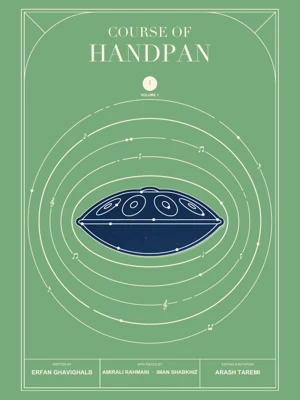
LEVELS 1–5
Course of Handpan · Book 1
The reference book for the first five levels of PlayPan.
View on Amazon (opens in a new tab)

Choose a PlayPan plan to watch this video.
View PlansPlay backing tracks here, download them, or open the original file in a new tab.
The reference book for the first five levels of PlayPan.
View on Amazon (opens in a new tab)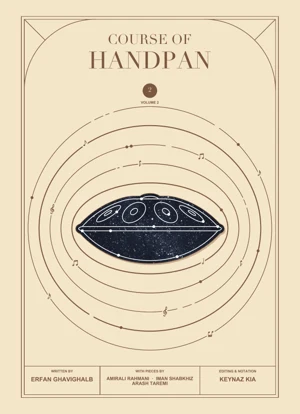
The reference book for the next five levels of PlayPan.
View on Amazon (opens in a new tab)Lesson description and learning notes
In Lesson 55 & Piece 12, we explore a handpan piece that features a musical theme previously introduced in earlier lessons, but with altered measures to create a fresh interpretation. These changes in rhythm and execution provide a new expressive dimension, allowing you to experience the familiar theme with renewed energy and emotion
Understanding the 5-Beat Rhythm
This piece is performed in a 5-beat (quintuple) rhythm, a common and captivating rhythm in Iranian and many Eastern musical traditions. In classical Persian music, especially traditional and Maqami styles, similar rhythmic patterns often alternate long and short beats, creating dynamic energy and expressive nuance. Playing this rhythm allows the performer to convey varied emotions, maintain precise timing, and provide listeners with a sense of flow and vibrancy
Step-by-Step Practice for Piece 12
Initial Preparation:
Take several deep breaths before playing and eliminate distractions.
Focus fully on executing the 5-beat rhythm accurately.
Practicing the 5-Beat Rhythm:
The rhythm consists of five beats per measure. Start slowly, counting and playing each beat carefully.
Beats 1 and 2 should be strong and accented.
Beats 3 and 4 are played normally.
Beat 5 requires extra emphasis.
Begin at a slower tempo to build precision, then gradually increase speed.
Performing the Piece:
Once comfortable with the rhythm, perform the full piece.
Pay attention to energy transitions and dynamic changes in each measure.
Incorporate techniques like drag or trill to add variety and expressiveness.
Using Tension and Release:
The combination of the 5-beat rhythm and measure variations allows you to create musical tension, followed by moments of release and calm.
Mastering these dynamics will make your performance more engaging and emotionally impactful.
Benefits of Consistent Practice:
Develop a better understanding of complex rhythms
Improve hand coordination, timing, and precision
Enhance musical expression and dynamic control
Prepare for advanced handpan improvisation and performance
 1. Course Introduction
Free
Completed
1. Course Introduction
Free
Completed
 2. Scale Introduction for Training and Playing Pieces
Free
Completed
2. Scale Introduction for Training and Playing Pieces
Free
Completed
 3. Proper handpan placement for practice
Plan required
Completed
3. Proper handpan placement for practice
Plan required
Completed
 4. Handpan Symbols
Plan required
Completed
4. Handpan Symbols
Plan required
Completed
 5. Learning Dynamics on the Handpan
Plan required
Completed
5. Learning Dynamics on the Handpan
Plan required
Completed
 6. Learning and Performance of Lessons 28 & 29 and Piece No. 7 (Samba Piece on Handpan)
Plan required
Completed
6. Learning and Performance of Lessons 28 & 29 and Piece No. 7 (Samba Piece on Handpan)
Plan required
Completed
 7. Learning and Performance of Lessons 30 to 37 (Heel and Tip Technique)
Plan required
Completed
7. Learning and Performance of Lessons 30 to 37 (Heel and Tip Technique)
Plan required
Completed
 8. Learning and Performance of Lesson 38 and Piece No. 8 (Handpan Advanced Rhythms)
Plan required
Completed
8. Learning and Performance of Lesson 38 and Piece No. 8 (Handpan Advanced Rhythms)
Plan required
Completed
 9. Learning and Performance of Lesson 39 and Piece No 9
Plan required
Completed
9. Learning and Performance of Lesson 39 and Piece No 9
Plan required
Completed
 10. Learning and Performance of Lessons 40 to 46
Plan required
Completed
10. Learning and Performance of Lessons 40 to 46
Plan required
Completed
 11. Lesson and Performance of Piece No. 10
Plan required
Completed
11. Lesson and Performance of Piece No. 10
Plan required
Completed
 12. Learning and Performance of Lesson 47
Plan required
Completed
12. Learning and Performance of Lesson 47
Plan required
Completed
 13. Learning and Performance of Lessons 48–53
Plan required
Completed
13. Learning and Performance of Lessons 48–53
Plan required
Completed
 14. Learning and Performance of Lesson 54 & Piece 11
Now playing
Plan required
Completed
14. Learning and Performance of Lesson 54 & Piece 11
Now playing
Plan required
Completed
 15. Learning and Performance of Lessons 55–58 – Basnawa Rhythm on Handpan
Plan required
Completed
15. Learning and Performance of Lessons 55–58 – Basnawa Rhythm on Handpan
Plan required
Completed
Comments