
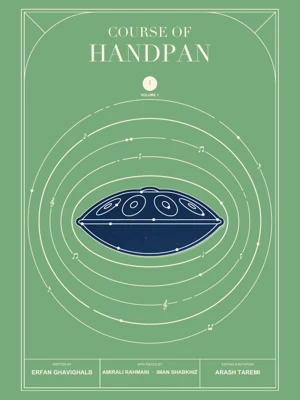
LEVELS 1–5
Course of Handpan · Book 1
The reference book for the first five levels of PlayPan.
View on Amazon (opens in a new tab)

Choose a PlayPan plan to watch this video.
View Plans
The reference book for the first five levels of PlayPan.
View on Amazon (opens in a new tab)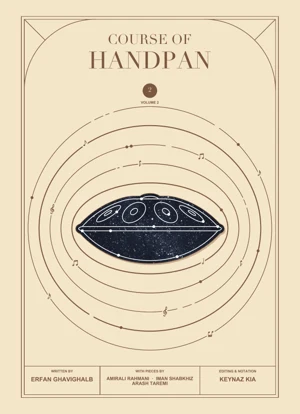
The reference book for the next five levels of PlayPan.
View on Amazon (opens in a new tab)Lesson description and learning notes
Heel and Tip Technique on Handpan
In this session, we focus on one of the key techniques in handpan playing, as well as other percussion instruments, known as the Heel and Tip technique. This method is essential for handpan players who want to achieve better control over dynamics, sound quality, and precision during performances
Heel Technique
The Heel technique involves using the heel of your hand to strike the handpan surface. Most of the pressure and energy comes from the heel, producing deep, resonant tones. This technique is especially useful for strong, full-bodied hits and adds variety to your handpan sound. Mastering the heel technique allows you to fully utilize the instrument’s tonal potential while maintaining consistent control
Tip Technique
The Tip technique focuses on striking the handpan with the fingertips. This method is ideal for fast, precise, and delicate notes, making it essential for executing intricate melodic lines and rhythmic patterns. When combined with the Heel technique, it allows the performer to create a wide range of tones and rhythmic textures, enhancing musical expression and dynamics
Corrective Practice Exercise
In this session, we introduce a corrective exercise that incorporates both Heel and Tip techniques. The exercise begins with a hit using the heel of the hand, generating a deep, rich sound, followed by a strike with the fingertips to produce a clear, delicate tone
This alternation between heel and tip enables the hand to reset naturally, maintaining precision while conserving energy. It also trains the performer to focus continuously on accuracy, hand coordination, and timing, which are critical for advanced handpan performance
Importance of Practice
Consistent practice of this exercise ensures that Heel and Tip techniques become automatic and effortless, allowing the performer to execute complex patterns with ease. Key benefits include:
Enhanced control over hand strikes for precise and expressive playing.
Improved sonority and tonal quality of the handpan.
Increased hand coordination and independence, essential for complex rhythmic and melodic sequences.
Greater dynamic range and expressive possibilities, enabling more creative performances.
Overall, mastering the Heel and Tip techniques allows handpan players to fully utilize the instrument’s capabilities, adding variety, depth, and richness to their musical performances. These techniques are foundational for progressing to advanced handpan exercises and pieces, making them indispensable for any serious handpan learner
 1. Course Introduction
Free
Completed
1. Course Introduction
Free
Completed
 2. Scale Introduction for Training and Playing Pieces
Free
Completed
2. Scale Introduction for Training and Playing Pieces
Free
Completed
 3. Proper handpan placement for practice
Plan required
Completed
3. Proper handpan placement for practice
Plan required
Completed
 4. Handpan Symbols
Plan required
Completed
4. Handpan Symbols
Plan required
Completed
 5. Learning Dynamics on the Handpan
Plan required
Completed
5. Learning Dynamics on the Handpan
Plan required
Completed
 6. Learning and Performance of Lessons 28 & 29 and Piece No. 7 (Samba Piece on Handpan)
Plan required
Completed
6. Learning and Performance of Lessons 28 & 29 and Piece No. 7 (Samba Piece on Handpan)
Plan required
Completed
 7. Learning and Performance of Lessons 30 to 37 (Heel and Tip Technique)
Now playing
Plan required
Completed
7. Learning and Performance of Lessons 30 to 37 (Heel and Tip Technique)
Now playing
Plan required
Completed
 8. Learning and Performance of Lesson 38 and Piece No. 8 (Handpan Advanced Rhythms)
Plan required
Completed
8. Learning and Performance of Lesson 38 and Piece No. 8 (Handpan Advanced Rhythms)
Plan required
Completed
 9. Learning and Performance of Lesson 39 and Piece No 9
Plan required
Completed
9. Learning and Performance of Lesson 39 and Piece No 9
Plan required
Completed
 10. Learning and Performance of Lessons 40 to 46
Plan required
Completed
10. Learning and Performance of Lessons 40 to 46
Plan required
Completed
 11. Lesson and Performance of Piece No. 10
Plan required
Completed
11. Lesson and Performance of Piece No. 10
Plan required
Completed
 12. Learning and Performance of Lesson 47
Plan required
Completed
12. Learning and Performance of Lesson 47
Plan required
Completed
 13. Learning and Performance of Lessons 48–53
Plan required
Completed
13. Learning and Performance of Lessons 48–53
Plan required
Completed
 14. Learning and Performance of Lesson 54 & Piece 11
Plan required
Completed
14. Learning and Performance of Lesson 54 & Piece 11
Plan required
Completed
 15. Learning and Performance of Lessons 55–58 – Basnawa Rhythm on Handpan
Plan required
Completed
15. Learning and Performance of Lessons 55–58 – Basnawa Rhythm on Handpan
Plan required
Completed
Comments