
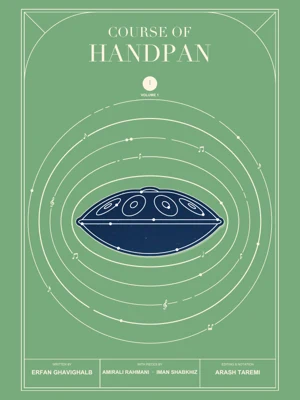
LEVELS 1–5
Course of Handpan · Book 1
The reference book for the first five levels of PlayPan.
View on Amazon (opens in a new tab)

Choose a PlayPan plan to watch this video.
View Plans
The reference book for the first five levels of PlayPan.
View on Amazon (opens in a new tab)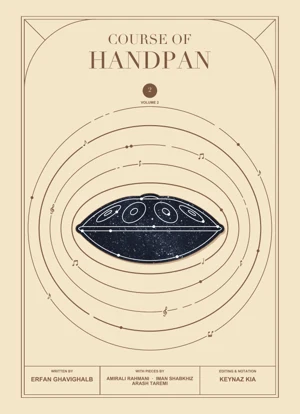
The reference book for the next five levels of PlayPan.
View on Amazon (opens in a new tab)Lesson description and learning notes
Handpan Trill Technique – Learning and Practice
The trill technique is one of the fundamental and highly practical techniques in handpan (Hang Drum) playing. It allows the player to strike three notes with a single finger movement, making it especially useful for passages that require high speed and precise accuracy. This technique is energy-efficient because the finger movement is optimized to minimize effort, allowing performers to play longer and faster without fatigue
Learning the Trill Technique
At first, mastering the trill may be challenging, as it requires coordination and finger control. Many learners may find it difficult to perform correctly for the first few weeks or even a month. However, with consistent practice and patience, the technique gradually becomes natural, enabling the player to achieve faster and more accurate execution
Step-by-Step Trill Practice
Initial Preparation:
Ensure your fingers are in a comfortable and proper position.
Focus on the fingers that will be used to strike the notes.
Finger Movement:
The trill typically uses two fingers to play three notes.
The motion should be smooth and continuous: the first finger strikes the first note, the second finger immediately hits the second note, and the first finger strikes the third note.
Practice at Slow Speed:
Start playing the trill slowly and deliberately.
Focus on accuracy, finger coordination, and timing.
Once comfortable, gradually increase the speed while maintaining control and precision.
Application in Different Pieces:
Practice the trill within various handpan pieces.
Begin with simpler rhythms and gradually move to more complex compositions.
With consistent repetition and dedication, the trill technique becomes a natural extension of your hand movement, eventually becoming a core skill for executing fast, precise passages on the handpan
 1. Course Introduction
Free
Completed
 2. Scale Introduction for Training and Playing Pieces
Free
Completed
 3. Proper handpan placement for practice
Plan required
Completed
 4. Handpan Symbols
Plan required
Completed
 5. Learning Dynamics on the Handpan
Plan required
Completed
 6. Learning and Performance of Lessons 28 & 29 and Piece No. 7 (Samba Piece on Handpan)
Plan required
Completed
 7. Learning and Performance of Lessons 30 to 37 (Heel and Tip Technique)
Plan required
Completed
 8. Learning and Performance of Lesson 38 and Piece No. 8 (Handpan Advanced Rhythms)
Plan required
Completed
 9. Learning and Performance of Lesson 39 and Piece No 9
Plan required
Completed
 10. Learning and Performance of Lessons 40 to 46
Plan required
Completed
 11. Lesson and Performance of Piece No. 10
Plan required
Completed
 12. Learning and Performance of Lesson 47
Plan required
Completed
 13. Learning and Performance of Lessons 48–53
Now playing
Plan required
Completed
 14. Learning and Performance of Lesson 54 & Piece 11
Plan required
Completed
 15. Learning and Performance of Lessons 55–58 – Basnawa Rhythm on Handpan
Plan required
Completed
Comments