
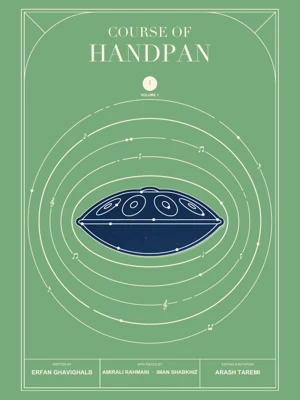
LEVELS 1–5
Course of Handpan · Book 1
The reference book for the first five levels of PlayPan.
View on Amazon (opens in a new tab)

Choose a PlayPan plan to watch this video.
View Plans
The reference book for the first five levels of PlayPan.
View on Amazon (opens in a new tab)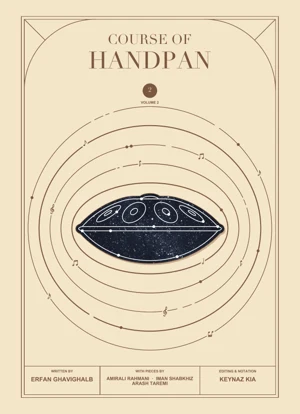
The reference book for the next five levels of PlayPan.
View on Amazon (opens in a new tab)Lesson description and learning notes
This piece, with its free-flowing and vocal-like structure, provides a unique space for the performer to showcase their emotional and technical abilities. Initially, the phrases should be played freely, giving the musician the opportunity to create a special atmosphere by relying on feeling and musical intuition. Attention to nuances—such as dynamics and ornamentations—is especially important, as these subtle features define the character of the music.
Key Points for Performing this Piece:
Vocal-like Freedom: The piece is performed in a free, vocal-inspired style on the handpan, without strict rhythmic limitations. This allows the performer to express inner emotions naturally. The goal is for the melodies to flow smoothly, as if telling a wordless story.
Practice and Mastery of Ornamentations: Ornamentations, executed with both hands, are essential for enhancing and beautifying the melodies. Careful practice of these details, especially at slow speeds initially, ensures a more expressive and impactful performance.
Hand Coordination and Timing: Many sections require the simultaneous use of both hands to perform ornamentations. This demands precise coordination to maintain balanced, complementary sounds. Practicing slowly is crucial for achieving perfect synchronization.
Use of Dynamic Variations: Dynamics, or changes in volume and intensity, significantly affect the interpretation of the piece. The performer should be able to move seamlessly between tension and relaxation throughout the performance. These variations should feel natural and continuous to convey the full emotional depth of the music.
Practice Recommendations: Start by practicing each section individually. Focus on ornamentations first at a slow tempo, gradually increasing speed as you gain control. Listening to the original piece while practicing can also help improve coordination and mastery of nuances and dynamic expression
This piece not only enhances technical skills but also encourages expressive freedom, allowing performers to bring their personal interpretation and emotion into every performance
 1. Course Introduction
Free
Completed
1. Course Introduction
Free
Completed
 2. Scale Introduction for Training and Playing Pieces
Free
Completed
2. Scale Introduction for Training and Playing Pieces
Free
Completed
 3. Proper handpan placement for practice
Plan required
Completed
3. Proper handpan placement for practice
Plan required
Completed
 4. Handpan Symbols
Plan required
Completed
4. Handpan Symbols
Plan required
Completed
 5. Learning Dynamics on the Handpan
Plan required
Completed
5. Learning Dynamics on the Handpan
Plan required
Completed
 6. Learning and Performance of Lessons 84, 85, 86 & Piece 18
Plan required
Completed
6. Learning and Performance of Lessons 84, 85, 86 & Piece 18
Plan required
Completed
 7. Learning and Performance of Piece 19 No (5/8 Rhythm on Handpan)
Plan required
Completed
7. Learning and Performance of Piece 19 No (5/8 Rhythm on Handpan)
Plan required
Completed
 8. Learning and Performance of Piece 20 No (7/8 Rhythm on Handpan)
Plan required
Completed
8. Learning and Performance of Piece 20 No (7/8 Rhythm on Handpan)
Plan required
Completed
 9. Learning and Performance of Lesson 87 (Four-Note Ornaments)
Plan required
Completed
9. Learning and Performance of Lesson 87 (Four-Note Ornaments)
Plan required
Completed
 10. Learning and Performance of Lessons 88 & 89 and Piece 21
Now playing
Plan required
Completed
10. Learning and Performance of Lessons 88 & 89 and Piece 21
Now playing
Plan required
Completed
 11. Learning and Performance of Piece No 22 (Chahar Mezrab)
Plan required
Completed
11. Learning and Performance of Piece No 22 (Chahar Mezrab)
Plan required
Completed
 12. Learning and performing lessons 90 to 102 Nail and Pelang (snap) techniques on handpan
Plan required
Completed
12. Learning and performing lessons 90 to 102 Nail and Pelang (snap) techniques on handpan
Plan required
Completed
 13. Learning and Performing Exercises 103 to 106 and Piece 23 No (Stay)
Plan required
Completed
13. Learning and Performing Exercises 103 to 106 and Piece 23 No (Stay)
Plan required
Completed
 14. Learning and Performing Piece No 24
Plan required
Completed
14. Learning and Performing Piece No 24
Plan required
Completed
 15. Learning and Performing Piece No 25 (Formation)
Plan required
Completed
15. Learning and Performing Piece No 25 (Formation)
Plan required
Completed
 16. Learning and Performing Piece No 26
Plan required
Completed
16. Learning and Performing Piece No 26
Plan required
Completed
Comments