
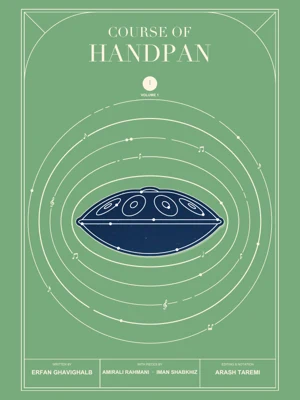
LEVELS 1–5
Course of Handpan · Book 1
The reference book for the first five levels of PlayPan.
View on Amazon (opens in a new tab)

Choose a PlayPan plan to watch this video.
View Plans
The reference book for the first five levels of PlayPan.
View on Amazon (opens in a new tab)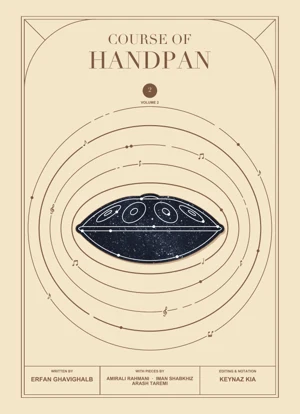
The reference book for the next five levels of PlayPan.
View on Amazon (opens in a new tab)Lesson description and learning notes
Handpan Notation: Mastering Symbols for Advanced Playing
Understanding and performing handpan notation is a fundamental principle for learning and accurately executing complex handpan pieces. Globally standardized musical symbols are meticulously designed for instruments like the handpan, allowing players to approach even the most challenging compositions with precision and deep musical understanding.
The Importance of Handpan Symbols
Handpan notation includes symbols for dynamics, accents, rhythms, articulations, and advanced techniques. Mastery of these symbols provides the following benefits for handpan players:
Precise Section Separation
Standardized symbols allow the player to differentiate each section of a composition, executing every part with high precision. This is especially critical for complex pieces featuring rapid rhythmic changes, dynamic shifts, or intricate melodic patterns. Proper interpretation ensures clarity and accuracy throughout performance.
Accurate Execution of Techniques
Symbols often indicate specific handpan techniques, including staccato, slap, ghost notes, and other nuanced articulations. Without these symbols, executing techniques accurately becomes extremely challenging. Mastery of notation ensures each technique is performed with control, consistency, and musical expression.
Dynamic Control and Volume Variation
Notation symbols for dynamics guide players in controlling sound intensity, enabling both subtle and dramatic variations in volume. This allows performers to convey the intended emotional content of a piece and maintain the musical integrity of complex compositions.
Comprehensive Understanding of Structure
Symbols representing form, repeats, passages, and melodic variations help musicians understand the overall structure of a composition. This ensures coherent, fluid, and well-organized performances, even in intricate pieces with multiple motifs and thematic developments.
Enhanced Practice and Learning Efficiency
Using standardized handpan notation promotes organized and systematic practice. This structured approach accelerates learning, helps internalize complex rhythms and techniques, and prepares the musician to perform challenging pieces with confidence.
Conclusion
Global standardized handpan notation is essential for maintaining accuracy, clarity, and cohesion in performance. By mastering these symbols, musicians can fully leverage their technical and emotional capabilities, delivering performances that are precise, expressive, and musically compelling.
 1. Course Introduction
Free
Completed
 2. Scale Introduction for Training and Playing Pieces
Free
Completed
 3. Proper handpan placement for practice
Plan required
Completed
 4. Handpan Symbols
Now playing
Plan required
Completed
 5. Learning Dynamics on the Handpan
Plan required
Completed
 6. Learning and Performing Piece No 27
Plan required
Completed
 7. Learning and Performing Piece No 28 (Rotation)
Plan required
Completed
 8. Learning and Performing Piece No 29
Plan required
Completed
 9. Learning and Performing Lessons 107–109 and Piece No 30
Plan required
Completed
 10. Learning and Performing Lessons 110–113 and Piece No 31
Plan required
Completed
 11. Learning and Performing Piece No 32
Plan required
Completed
 12. Learning and Performing Lesson 114 and Piece 33 (7/8 Rhythm on Handpan)
Plan required
Completed
 13. Learning and Performing Lessons 115–117 and Piece 34 (Reflection)
Plan required
Completed
 14. Learning and Performing Piece No 35 (Levitating by Dua Lipa) on Handpan
Plan required
Completed
 15. Learning and Performing Lesson 118 and Piece No 36 (Shining)
Plan required
Completed
 16. Learning and Performing Lessons 119–121 and Piece No 37
Plan required
Completed
 17. Learning and Performing Lesson 122 and Piece No 38 (Awakening)
Plan required
Completed
Comments